
FDNY Probie Manual: A Comprehensive Guide
This manual serves as a vital resource for probationary firefighters, detailing essential knowledge and skills for success within the FDNY,
covering everything from academy training to operational procedures and continued professional development․
The Fire Department of New York (FDNY) stands as a cornerstone of public safety, bravely responding to fires, medical emergencies, disasters, and acts of terrorism that threaten New York City’s residents and visitors․ Becoming a firefighter with the FDNY is a highly competitive process, culminating in the probationary firefighter period – a crucial formative experience․

This “probie” experience is designed to transition recruits from academy training into the realities of firehouse life․ New firefighters are assigned to experienced companies, working under the guidance of officers and senior members․ The initial months focus on practical application of learned skills, adapting to the department’s culture, and demonstrating a commitment to teamwork and continuous learning․ It’s a period of intense observation, active participation, and unwavering dedication to upholding the FDNY’s proud tradition of service and bravery․
The Role of a Probationary Firefighter
A Probationary Firefighter’s role is fundamentally one of learning and contributing to the overall effectiveness of the fire company․ While possessing foundational skills from the academy, probies are expected to actively seek mentorship and refine their abilities under real-world conditions․ This involves participating in daily drills, maintaining equipment, and assisting with routine tasks alongside seasoned firefighters․
Crucially, probies must demonstrate a willingness to learn from every experience, embracing constructive criticism and consistently striving for improvement․ They are expected to adhere to all departmental regulations, maintain physical fitness, and uphold the highest standards of professionalism․ The probationary period is an evaluation – a chance to prove competence, reliability, and a genuine dedication to the demanding, yet rewarding, life of a New York City firefighter․
Physical and Mental Preparation
Success in the FDNY demands peak physical conditioning and unwavering mental fortitude; rigorous training and proactive stress management are absolutely essential for every firefighter․
Physical Fitness Standards and Training
Maintaining exceptional physical fitness is non-negotiable for FDNY probationary firefighters․ The demands of the job – carrying heavy equipment, navigating challenging environments, and performing strenuous tasks – require a high level of strength, endurance, and agility․ Candidates must be prepared to excel in Probationary Firefighter School, which includes physically demanding drills and assessments․
Training regimens should focus on cardiovascular fitness, muscular strength and endurance, and flexibility․ Regular exercise, including running, weightlifting, and calisthenics, is crucial․ Specific exercises mimicking firefighting tasks, such as hose drags and ladder climbs, are highly beneficial․ Prior preparation is key to performing well and minimizing the risk of injury during the academy․ Remember, consistent effort and dedication to physical conditioning are fundamental to a successful career with the FDNY․
Mental Fortitude and Stress Management
The FDNY profession inherently involves exposure to traumatic events and high-stress situations․ Developing robust mental fortitude and effective stress management techniques is therefore paramount for probationary firefighters․ The ability to remain calm under pressure, make sound decisions in critical moments, and process emotionally challenging experiences is essential for both personal well-being and effective job performance․
Proactive strategies include mindfulness practices, peer support networks, and utilizing available counseling services․ Recognizing personal limitations and seeking help when needed demonstrates strength, not weakness․ Building resilience through self-care, maintaining a healthy work-life balance, and fostering strong relationships are vital components of mental wellness․ The FDNY provides resources to support firefighters’ mental health, and utilizing these resources is strongly encouraged․
FDNY Probationary Firefighter School
This intensive training program prepares recruits for the demands of firefighting, encompassing fire suppression, search and rescue, and essential equipment operation skills․
Overview of the Curriculum
The FDNY Probationary Firefighter School curriculum is a rigorous and comprehensive program designed to transform civilian recruits into skilled and capable firefighters․ It’s structured to provide a foundational understanding of fire science, building construction, and the practical skills necessary for effective emergency response․ Recruits undergo extensive training in fire suppression techniques, learning hose handling, nozzle operation, and fire stream effectiveness․
A significant portion of the curriculum focuses on search and rescue procedures, emphasizing systematic search patterns and victim removal techniques․ Forcible entry training equips firefighters with the skills to breach doors and windows safely and efficiently․ Ventilation techniques are also covered, teaching recruits how to strategically remove smoke and heat to improve visibility and firefighter safety․ Furthermore, the school provides in-depth instruction on SCBA operation and maintenance, ensuring recruits are proficient in using this life-saving equipment․ The program emphasizes teamwork, discipline, and adherence to departmental protocols, preparing probationary firefighters for the challenges they will face on the fireground․
Fire Suppression Techniques
Effective fire suppression is a cornerstone of FDNY operations, and probationary firefighters receive extensive training in this critical area․ The curriculum begins with a thorough understanding of fire behavior – how fires start, spread, and react to different extinguishing agents․ Recruits learn various hose line deployments, including offensive and defensive strategies, adapting to different fire scenarios and building layouts․
Nozzle techniques are emphasized, covering different nozzle types and their appropriate applications for optimal fire control․ Students practice coordinated fire attacks, working as a team to effectively cool the fire, protect exposures, and ultimately extinguish the flames․ Water supply management is also a key component, teaching recruits how to establish and maintain a reliable water source․ The training incorporates realistic fire simulations, utilizing live fire exercises to reinforce learned skills and build confidence in a high-stress environment․ Emphasis is placed on safety, ensuring firefighters operate effectively while minimizing risk․
Search and Rescue Procedures
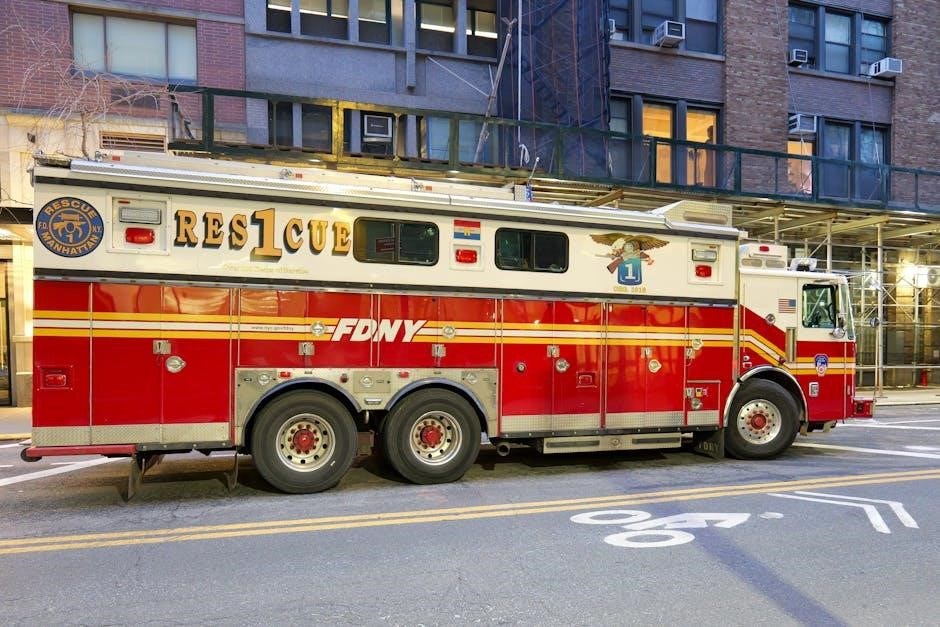
A primary duty of FDNY firefighters is the swift and safe rescue of occupants from burning buildings․ Probationary firefighters undergo rigorous training in systematic search techniques, prioritizing speed and thoroughness․ They learn to navigate smoke-filled environments, utilizing ropes and other tools to maintain orientation and ensure a safe search pattern․
Emphasis is placed on victim removal techniques, including proper carries and drags, adapting to different victim sizes and conditions․ Recruits practice rapid intervention team (RIT) procedures, preparing them to rescue downed firefighters․ Thermal imaging camera (TIC) operation is a crucial component, enabling firefighters to locate victims in zero-visibility conditions․ Training scenarios simulate realistic building layouts and fire conditions, challenging recruits to apply their skills under pressure․ Constant communication and teamwork are stressed, ensuring a coordinated and effective search and rescue operation, always prioritizing life safety․
Forcible Entry Training
Gaining access to locked or barricaded structures is often critical during fire and rescue operations․ FDNY probationary firefighters receive extensive training in various forcible entry techniques, emphasizing safety and efficiency․ This includes mastering the use of halligan bars, axes, and other specialized tools to breach doors, windows, and walls․
Recruits learn to identify different door and lock types, selecting the appropriate method for entry․ Training covers techniques like prying, striking, and using hydraulic spreaders․ Emphasis is placed on understanding building construction and potential collapse hazards․ Simulations involve realistic door and window setups, allowing recruits to practice their skills under controlled conditions․ Teamwork and communication are vital, ensuring a coordinated and safe forcible entry operation․ Proper tool maintenance and safety protocols are also thoroughly covered, minimizing risk during actual emergencies․
Ventilation Techniques
Effective ventilation is paramount for firefighter safety and successful fire suppression․ FDNY probationary firefighters undergo rigorous training in both horizontal and vertical ventilation methods․ This training focuses on creating controlled airflow to remove smoke and heat, improving visibility and reducing the risk of flashover or backdraft․
Recruits learn to assess building construction, fire conditions, and wind direction to determine the optimal ventilation strategy․ Techniques include opening windows, doors, and utilizing fans to create positive or negative pressure․ Vertical ventilation, involving opening roofs or stairwells, is practiced with strict safety protocols․ Understanding fire behavior and the impact of ventilation on fire development is crucial․ Simulations involve realistic fire scenarios, allowing recruits to practice ventilation techniques under stressful conditions․ Team coordination and communication are emphasized to ensure a safe and effective ventilation operation․
Hose Handling and Water Supply
Mastering hose handling and understanding water supply are fundamental skills for every FDNY probationary firefighter․ Training encompasses various hose lays – straight, reverse, and split – adapting to different building layouts and fire scenarios․ Recruits learn proper techniques for advancing hose lines, connecting to hydrants, and operating standpipe systems․
Emphasis is placed on maintaining hose lines free of kinks and obstructions, ensuring a consistent water flow․ Understanding pump operations, friction loss, and water pressure calculations is critical․ Probationary firefighters practice nozzle techniques, including fog and straight stream patterns, to effectively cool fires and protect exposures․ Drills simulate real-world conditions, requiring recruits to quickly establish a reliable water supply and deliver water to the fire․ Teamwork and communication are vital for efficient hose handling and a coordinated fire attack․
Essential Equipment and Tools
Probationary firefighters must become proficient with a wide array of equipment, including PPE, hand tools, power tools, and SCBA, ensuring safe and effective operations․
Personal Protective Equipment (PPE)
Personal Protective Equipment (PPE) is paramount for firefighter safety, forming the critical barrier between firefighters and the hazardous environments they encounter․ This includes the full ensemble: helmet, coat, pants, boots, gloves, and protective hood․ Probationary firefighters will undergo rigorous training on proper donning and doffing procedures, ensuring a secure and functional fit․
Understanding the limitations of each PPE component is crucial; regular inspection for damage is mandatory before and after each incident․ Proper maintenance, cleaning, and storage extend the lifespan of this vital equipment․ The FDNY emphasizes the importance of a complete and functional PPE ensemble, as it directly impacts a firefighter’s ability to operate safely and effectively in extreme conditions․ Familiarity with advancements in PPE technology is also a continuous learning process․
Hand Tools and Their Uses
Proficiency with hand tools is fundamental for a probationary firefighter, enabling effective operations at emergency scenes․ Essential tools include axes, halligan bars, pike poles, and various types of saws․ Each tool serves a specific purpose – forcible entry, ventilation, overhaul, and search & rescue – requiring dedicated training for safe and efficient application․
Probies will learn proper grip, swing techniques, and maintenance procedures for each tool, emphasizing teamwork and coordinated efforts․ Understanding the limitations of each tool and selecting the appropriate one for the task is critical․ Regular drills reinforce muscle memory and ensure readiness․ The FDNY stresses the importance of situational awareness when utilizing hand tools, prioritizing safety for both the firefighter and potential victims․
Power Tools and Safety Protocols
Power tools significantly enhance a firefighter’s capabilities, but demand rigorous adherence to safety protocols․ Common tools include rotary saws, chain saws, hydraulic rescue tools (Jaws of Life), and ventilation fans; Probationary firefighters undergo extensive training on the safe operation, maintenance, and limitations of each tool․
Emphasis is placed on personal protective equipment (PPE) – including eye and ear protection – and establishing a clear work zone․ Lockout/tagout procedures are strictly enforced to prevent accidental activation․ Proper fueling and storage are also critical components of the training․ The FDNY prioritizes a systematic approach to power tool usage, ensuring firefighters understand potential hazards and implement appropriate mitigation strategies to prevent injuries․
SCBA (Self-Contained Breathing Apparatus) Operation
Proficiency in SCBA operation is paramount for every FDNY firefighter, as it provides breathable air in Immediately Dangerous to Life or Health (IDLH) atmospheres․ The probationary firefighter curriculum dedicates substantial time to mastering SCBA donning, doffing, and emergency procedures․ This includes thorough understanding of the unit’s components, pre-use checks, and air management techniques․
Training emphasizes recognizing low-air alarms, buddy system protocols, and rapid intervention team (RIT) procedures․ Regular drills simulate realistic fireground conditions, reinforcing proper mask seal, communication, and emergency escape strategies․ Maintaining SCBA readiness and understanding its limitations are crucial for firefighter safety and effective operations within hazardous environments․

Fire Department Operations
Understanding FDNY’s operational framework, including Incident Command, communication, building construction, and hazardous materials, is critical for effective response and safety․
Incident Command System (ICS)
The Incident Command System (ICS) is a standardized, on-scene, all-hazard incident management concept․ It’s crucial for the FDNY to ensure effective and efficient response to emergencies․ Probationary firefighters must grasp the ICS principles, including the roles of Incident Commander, Operations Section Chief, Planning Section Chief, Logistics Section Chief, and Finance/Administration Section Chief․
Understanding the chain of command, span of control, and unified command are paramount․ Proper radio communication utilizing ICS terminology is also essential for clear and concise information flow․ Probies will learn how to establish a clear organizational structure, manage resources effectively, and maintain accountability throughout incident operations․ ICS facilitates interoperability with other agencies, ensuring a coordinated response during large-scale events, ultimately enhancing safety and operational success․
Radio Communication Protocols
Effective radio communication is the lifeline of FDNY operations, demanding strict adherence to established protocols by all members, especially probies․ Clear, concise, and standardized messaging is paramount for safety and operational efficiency․ Probationary firefighters will be thoroughly trained in the use of department-specific terminology, phonetic alphabet, and proper radio etiquette․
Understanding channel assignments, transmission procedures (pressing the transmit button, speaking clearly), and emergency tones is critical․ Probies must learn to relay vital information accurately – location, situation, resources needed – and acknowledge received messages․ Avoiding unnecessary chatter and maintaining radio discipline are essential․ Proper radio communication ensures coordinated efforts, prevents misunderstandings, and ultimately safeguards both firefighters and the public during emergencies․
Building Construction and Fire Behavior
A foundational element of FDNY training centers on understanding how buildings are constructed and how fires behave within them․ Probationary firefighters must develop a keen awareness of different construction types – wood-frame, masonry, steel-frame – and their inherent fire resistance characteristics․ This knowledge directly impacts tactical decisions and firefighter safety․
Understanding fire dynamics, including stages of fire development, ventilation’s impact, and the potential for flashover and backdraft, is crucial․ Probies will learn to recognize fire patterns, predict fire spread, and assess structural stability․ This includes recognizing lightweight construction and its rapid collapse potential․ Analyzing building layouts, identifying potential hazards, and anticipating fire behavior are vital skills honed during the probie period, ensuring informed and effective firefighting strategies․
Hazardous Materials Awareness
FDNY probationary firefighters receive comprehensive training in hazardous materials awareness, recognizing the potential for encountering these substances at emergency scenes․ This training goes beyond simple identification; it emphasizes the importance of recognizing potential hazards, protecting themselves and the public, and understanding the initial actions required․
Probies learn to identify placards and labels on vehicles and containers, understand the Emergency Response Guidebook (ERG), and utilize resources like CHEMTREC․ They’ll practice scene assessment techniques to identify potential hazards from a safe distance, including recognizing signs of chemical release․ The focus is on establishing isolation zones, preventing further contamination, and effectively communicating information to specialized Hazmat teams․ Awareness is paramount for ensuring a safe and effective response to incidents involving hazardous materials․

Post-Academy Training and Development
Continuous learning is crucial; the FDNY emphasizes ongoing education, certifications, company drills, and mentorship programs to refine skills and foster growth․
Continuing Education and Certifications
Beyond the foundational academy training, FDNY firefighters are expected to actively pursue continuing education and specialized certifications throughout their careers․ This commitment to lifelong learning ensures the department maintains a highly skilled and adaptable workforce capable of responding to evolving challenges․ Opportunities include advanced fire suppression courses, technical rescue certifications (such as rope rescue, confined space rescue, and structural collapse), hazardous materials technician training, and emergency medical certifications like Emergency Medical Technician (EMT) and Paramedic․
The FDNY actively supports these endeavors, often providing financial assistance and dedicated training time for members to obtain these credentials․ Maintaining current certifications is a requirement for many specialized roles within the department, and demonstrates a firefighter’s dedication to professional excellence and public safety․ These advanced skills enhance individual capabilities and contribute to the overall effectiveness of the FDNY’s response to complex incidents․
Company-Level Training and Drills
Following graduation from the Fire Academy, probationary firefighters are assigned to firehouses and immediately integrate into a rigorous schedule of company-level training and drills․ This hands-on experience, guided by experienced officers and firefighters, is crucial for solidifying the skills learned at the academy and adapting them to the unique challenges of operating within a specific neighborhood and responding to real-world emergencies․
Drills encompass a wide range of scenarios, including hose lays, search and rescue simulations, ventilation exercises, forcible entry practice, and building-specific pre-incident planning․ Regular drills ensure proficiency in essential firefighting techniques, reinforce teamwork, and foster a culture of continuous improvement․ These sessions are vital for maintaining operational readiness and ensuring a swift, coordinated, and effective response to any incident․
Mentorship Programs for Probationary Firefighters
Recognizing the importance of guidance and support during the critical probationary period, the FDNY implements structured mentorship programs․ These programs pair newly appointed firefighters with seasoned veterans who serve as mentors, providing invaluable advice, encouragement, and practical insights into the realities of fire department life․
Mentors assist probies in navigating the department’s culture, understanding operational procedures, and developing essential skills․ They offer a safe space for asking questions, discussing challenges, and receiving constructive feedback․ This relationship extends beyond technical skills, encompassing professional development, career guidance, and strategies for maintaining personal well-being․ A strong mentor-mentee relationship fosters confidence, accelerates learning, and contributes significantly to the probie’s successful integration into the FDNY family․
Advancement Opportunities within the FDNY
The FDNY offers a clear path for career advancement, encouraging continuous professional development and recognizing dedication and expertise․ Probationary firefighters who demonstrate proficiency, leadership potential, and a commitment to service can pursue various promotional opportunities throughout their careers․
Advancement typically involves competitive examinations, evaluations of performance, and completion of specialized training programs․ Opportunities include promotion to Firefighter, Lieutenant, Captain, Battalion Chief, and higher-ranking officer positions․ Specialized roles, such as fire marshal or EMS officer, also offer avenues for career growth․ The FDNY supports advancement through continuing education initiatives, leadership development programs, and tuition assistance, ensuring members have the resources to reach their full potential within the department’s structure․